
Our Location
304 North Cardinal St.
Dorchester Center, MA 02124

$999.00
库存 100 件
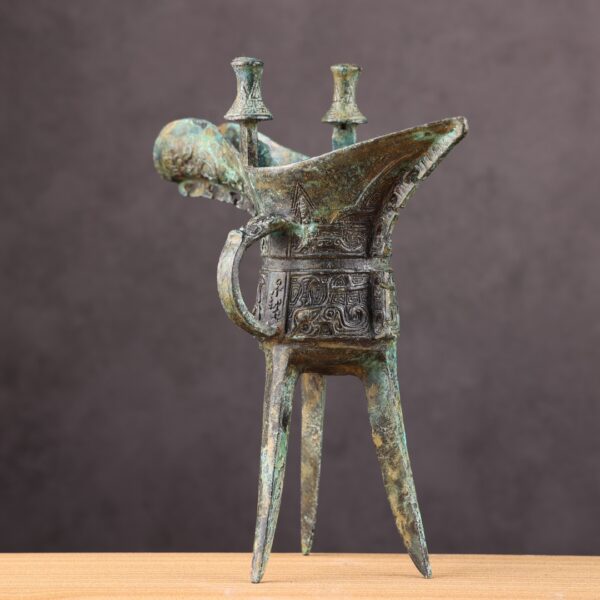
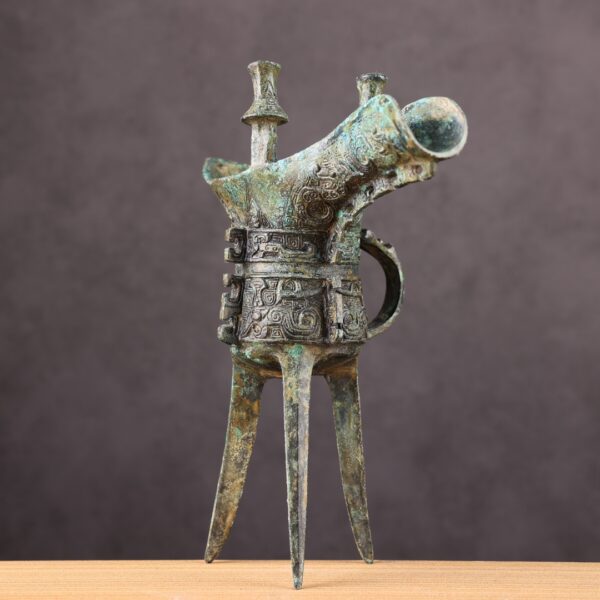
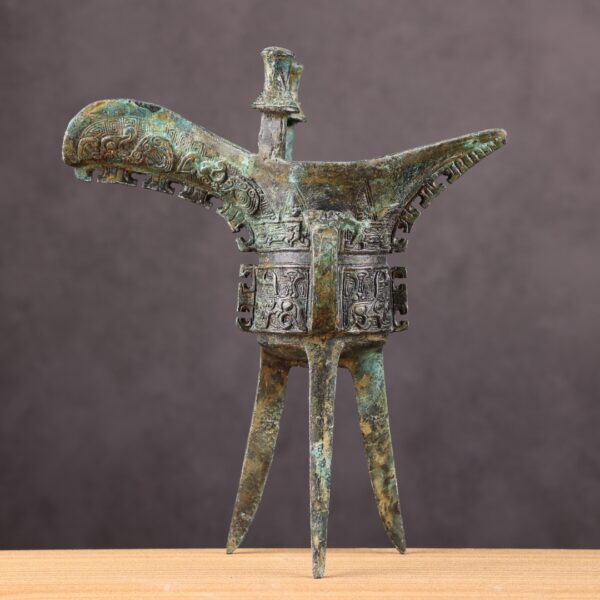
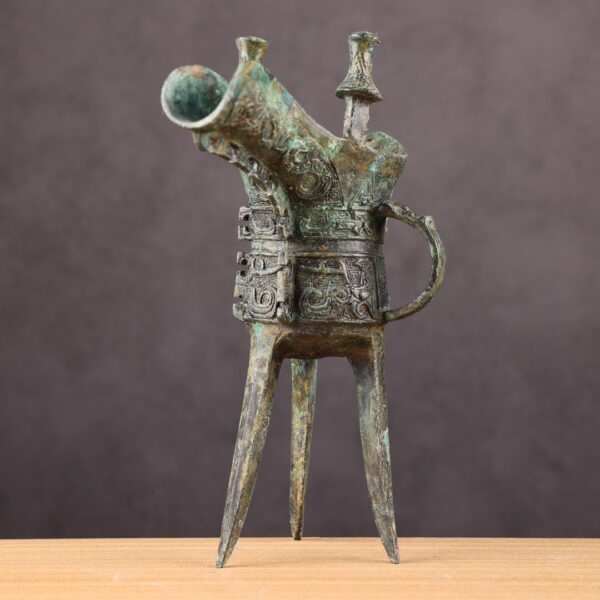
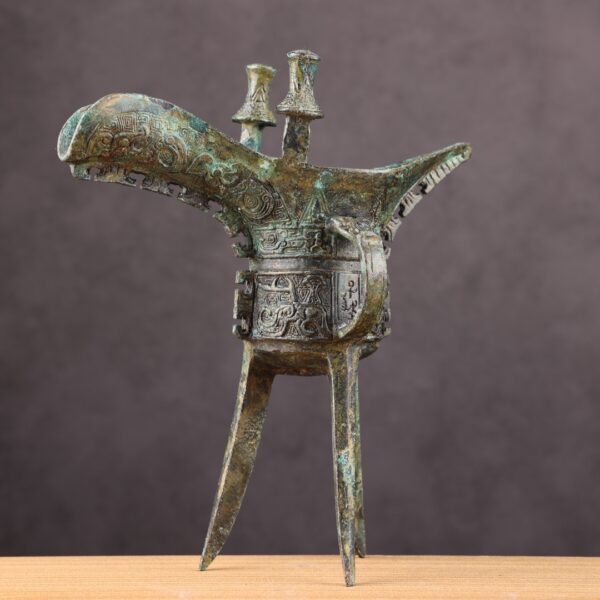
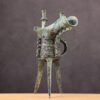
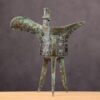
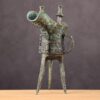
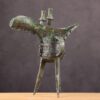
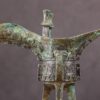
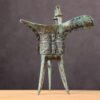
The bronze jue was a core ritual vessel and drinking vessel used for warming wine during the Xia, Shang, and Zhou dynasties. It first appeared in the Erlitou culture (Xia Dynasty), flourished from the Shang Dynasty to the early Western Zhou Dynasty, and gradually fell out of mainstream use after the mid-Western Zhou period. It is one of the earliest mature bronze containers in China.
Typical form
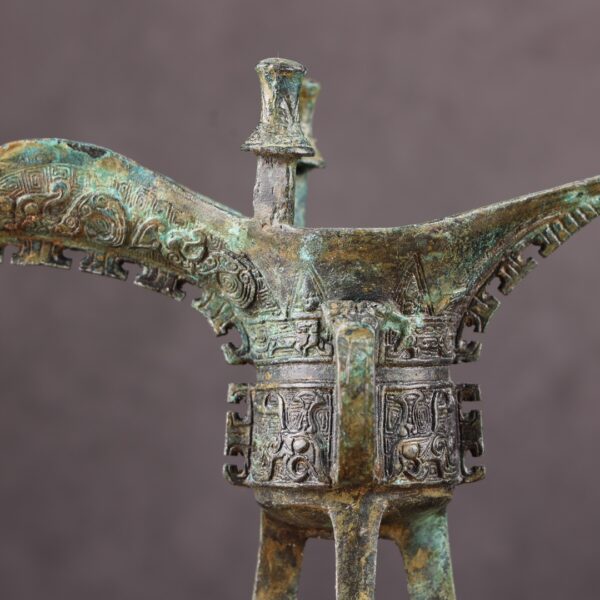
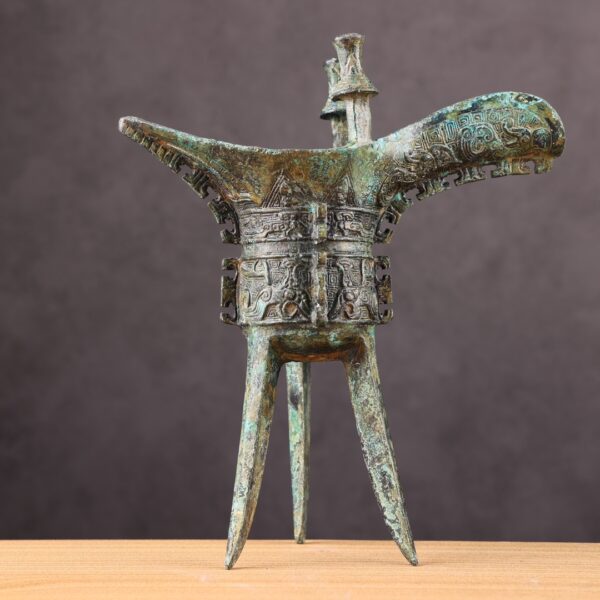
The standard design features a spout (a groove for pouring wine) at the front and a pointed tail at the back; a pair of columns are often placed between the spout and the mouth rim; one side of the vessel’s belly features a handle; and it rests on three pointed feet (for warming wine over a fire). In the early stages, it was mostly plain and thin-walled. During the late Shang Dynasty and the early Western Zhou Dynasty, it became thicker and heavier, with the body adorned with patterns such as Taotie patterns, cloud and thunder patterns, and banana leaf patterns. The columns and handles were often shaped like animal heads.
Function and cultural symbol
Practical: Primarily used for warming and pouring wine, with three legs for air ventilation, allowing for heating by igniting a fire underneath;
The core of ritual system: It is only seen in aristocratic tombs and ancestral temple sacrifices, serving as a symbol of rank and power. The word “jue” (爵) has also directly evolved into “juewei” (爵位), indicating social status and rank;
Sacrificial Vessel for Communicating with the Deities: In grand ceremonies such as worshiping heaven and ancestors, it serves as a vessel for offering wine, serving as a medium for communication between humans and deities.
评价
目前还没有评价